The Best of Everything
Encyclopedia Entry • Films Main
Today We Live
1933
Critics' Reviews • Our Reviews • Movie Posters • Lobby Cards • Misc. Images
Click here to see photos from the film.
US general release: 4/14/33.
VHS release: 11/10/93. Warner Archive DVD release: 5/2009. Cast: Joan Crawford (as "Diana Boyce-Smith"), Gary Cooper, Robert Young, Franchot Tone, Roscoe Karns, Louise Closser Hale, Rollo Lloyd, Hilda Vaughn. Credits: From the story "Turn About" by William Faulkner (who also did additonal dialogue for the film), which originally appeared in the March 5, 1932, issue of The Saturday Evening Post (and subsequently in the 1934 short-story collection Doctor Martino and Other Stories). Screenplay: Edith Fitzgerald, Dwight Taylor. Director: Howard Hawks. Camera: Oliver T. Marsh. Editor: Edward Curtiss. Art Direction: Cedric Gibbons. Gowns: Adrian. Sound: Douglas Shearer.
Plot Summary: A love triangle forms the basis of this drama set during WWI. The screenplay was written by the story's original author William Faulkner. It centers on a pleasure-seeking British girl who is romantically involved with her brother's naval buddy. She then sees and falls for an American pilot. He leaves to fly a combat mission over France and is later listed as dead, causing her to return to the sailor. Fortunately, the flyer didn't actually die and eventually the two are joyfully reunited. ~ Sandra Brennan, All Movie Guide
Notes: • In production beginning December 1932. • Aerial sequences shot at March Field in Riverside, CA. • Other dogfight footage taken from director Hawks' 1930 film Hell's Angels.
|
Joan Crawford and Gary Cooper in the First Picture Derived From a Story by William Faulkner.Bearing the title of "Today We Live," there is now at the Capitol the first of William Faulkner's literary efforts to reach the screen. It is said to have been derived chiefly from a short story called "Turn About," which is understood to have been amplified in the studio by the author. Although it is more than slightly different from the general run of cinematic works, it is at times vague and cumbersome. It possesses, however, the spark of sincerity, and its lack of clarity might be ascribed either to Howard Hawks's direction or to the script contributed by Edith Fitzgerald and Dwight Taylor, for there are sequences that are far too lengthy and others that would be considerably improved by more detail. As a drama of the war it is not precisely convincing, for coincidences play an important part in its arrangement. It is also anachronistic, particularly as regard the costumes worn by Joan Crawford. The narrative begins in London, but most of the action occurs in and around Boulogne. Diana Boyce-Smith, an English girl, played by Miss Crawford, is in love with Claude Hope, but after she encounters an American named Richard Bogard her affections sway to him. Subsequently she hears that Bogard has met death as an aviator and she continues her affair with Hope without benefit of clergy. Her brother, Ronnie, is always in her confidence, but he sympathizes with Hope, for he and Hope are both officers in the British Navy and on the same craft. Judging by what happens during one prolonged episode, Bogard, who is another of those fliers who is thought dead but eventually is found alive, scoffs at sea warfare as it is carried on by Ronnie and Hope, and he gives the latter a taste of fighting in the clouds. They return safely and Ronnie in turn dares Bogard to come out in his motor launch, which is equipped with a single torpedo. Bogard thus learns that there is as much excitement on the water as in the air, and, in the course of the daring attack on enemy vessels, Hope is blinded by a missile. The rivalry between the aviator and the naval officer persists to the end—when, after hearing that Bogard has volunteered to sacrifice his life to sink an enemy ship, Ronnie and the sightless Claude Hope speed out in their craft and succeed in accomplishing the desired task at the cost of their lives, before Bogard has a chance to swoop down from the air. So there are three heroes in this story. The romance between Bogard and Diana is set forth so abruptly that it is apt to seem absurd. The constant meeting of the four characters in France scarcely adds to the credibility of the story, and the activities supposed to be in the North Sea give the impression that German vessels were either hovering around or anchored somewhere in the vicinity of Boulogne. The producers could not possibly mean that the attacks were on Zeebrugge, for there is nothing that bears a semblance of the famous mole. Miss Crawford, although she never impresses one as being English, gives a steadfast and earnest portrayal. Robert Young is excellent as Hope, and Franchot Tone does well as Ronnie. Gary Cooper is quite believable as Bogard.
Richard Watts, Jr., in the New York Herald Tribune 1933
Visually, Today We Live is handsome, striking and genuinely dramatic, and that is not merely because Miss Crawford is photographed so beautifully. The scenes of aerial warfare are enormously effective, but such scenes have been portrayed so frequently that they have become the commonplace of the photoplay....Miss Crawford is properly effective in her role even if she doesn't seem like someone called Boyce-Smith.
Although William Faulkner is billed as the author of Today We Live, the picture is no devastating survey of the degeneracy of the New South, filled with murderous neurotics and pathological passions. Instead, it is a lugubrious romance of the war, replete with clipped speeches, heroic sacrifices, self-effacing nobility and many cries of "stout fellow!" As a matter of fact, it is only when one of the characters begins to play quaintly with a cockroach that you see any particular traces of the Faulkner influence at all....[The film] devotes most of its efforts to permitting Robert Young and Franchot Tone to destroy themselves gallantly so that Gary Cooper may henceforth live happily with Miss Joan Crawford. It was my suspicion yesterday that their sacrifice was too great.
March 17, 1933 When Today We Live is cut down to exhibition length it should prove very good entertainment. With Joan Crawford and Gary Cooper for the draw, it should sell about all the tickets there are to be sold in your zone. The story by William Faulkner, with the screen play by Edith Fitzgerald and Dwight Taylor, is swell writing from beginning to end, but it is our opinion that the story was terribly overwritten for the screen, necessitating an over-shooting that cost Metro-Goldwyn-Mayer many thousands of dollars that should have been saved. The released picture will contain very little of early sequences which proved entirely too boring for this spectator, and not until an air episode fairly lifts you out of your seat, do you realize you have finally gotten into what may prove a good picture. It is a story of a girl (Joan Crawford) and three boys, (Gary Cooper, Franchot Tone and Robert Young) two of who are in love with her and the third is her brother. All of it is played with the world war as a background, with Cooper doing service in the air, Tone and Young in the water, and Crawford in the ambulance corps. The picture brings to the screen some of the finest acting seen for some time. Joan Crawford, in addition to turning in a great performance, never looked so beautiful in her screen career. Gary Cooper edges further to the top with this picture under his belt. You will hear a lot about this fellow Franchot Tone during the coming months; he has everything that is required for a big featured spot. Robert Young topped all his previous efforts. Roscoe Karns walked away with every scene he was in, and Louise Closser Hale was a treat to see and hear. The direction of Howard Hawks was well nigh perfection. Aided by some beautiful writing and excellent acting, the picture will probably go down as one of the best directed in many a day; particularly in love scenes and the hair-raising scenes of battle, both in the air and on the water. You can't miss on this one. Give it everything you have. |
If you've seen Today We Live and would like to share your review here, please e-mail me. Include a picture of yourself or avatar to accompany your review, as well as a star-rating (with 5 stars the best) and any of your favorite lines from the film.
|
Rating: I was so confused during this movie. One minute Ronnie, Ann’s brother, is all stern and then the next, they look like lovers! “Oh you kissed me,” says Ann to Ronnie, then later: “Oh you kissed me twice now” …WTH was that about? I started to think that maybe she called him “brother” cos they grew up together, and he was LIKE a brother to her. Nope! It’s her brother. Also, when Richard becomes blind, he grabs Ronnie’s hand without even searching for it. LOL…How the hell did he know where his hand was on the table?!
Rating:
Apart from her lost silent films, Today We Live (1933) was the earliest entry in the Crawford filmography that I had not seen. On the surface, the movie has much to recommend it. First, there is early 1930’s Joan. She is lovely, raised to superstar status by her performance in Grand Hotel the year before. Joan’s co-star is Gary Cooper, not yet a Hollywood legend, but a star. Supporting them are Franchot Tone (talented stage actor and soon-to-be husband #2 of Joan) and Robert Young (who had made around a dozen movies in the early talkie era before this film and later went on to star in TV's Father Knows Best and Marcus Welby, MD).
Today We Live also has two accomplished character actors: Roscoe Karns and Louise Closser Hale. Wise-guy Karns is good here with limited screen time as the sidekick of Bogard (Cooper), and it's a shame that the veteran Ms. Closser Hale's role is also small (she died in July 1933, a few months after filming).
If that’s not enough, how about those behind the camera? William Faulkner wrote the short story Turnabout, upon which the film is based, and also worked on the screenplay. Today We Live is directed by Howard Hawks. Better known for directing John Wayne westerns such as Rio Bravo (1959), Hawks had a tremendous range--- from Gentlemen Prefer Blondes (1953) to The Big Sleep (1946) to Sergeant York (1941, also with Cooper) and just about every film genre---in a distinguished career. In Today We Live, however, both Hawks and his film seem lost.
With a talented team, how does a movie fail? The first warning sign was a run time of 113 minutes. TWL was the longest Joan flick since Grand Hotel at 112 minutes and until The Women (1939) at 2 hours 13 minutes, which both have large ensemble casts with multiple plot threads. And the IMDB says TWL was even about 20 minutes longer in the preview! The second warning sign was that, while I was working on this review a few days after watching it, I could not be bothered to look back at scenes to refresh my memory on a few plot points: One and done! There are several lengthy, undeveloped sequences like the bicycle scene, where Joan is pedaling into town and Bogard (Cooper) is on his own bike, heading the opposite way. They reach a crossroads, and Joan decides to follow Bogard and profess her love for him. Where the heck did that come from? You would think in a nearly 2-hour movie that they could have developed that story arc a tad more! Later, Joan runs away to London to escape Bogard, or is it to be with her other suitor, Claude (Young)? I have no idea. It's all very confusing, to say the least.
The best parts of the movie are the action scenes. Although in one of these scenes, Claude, a sailor, tags along with airman Bogard on a bombing mission. This is followed by Bogard going on a torpedo run against a German ship with Claude. Were combatants just allowed to pitch in wherever they felt during WWI? Seems implausible.
Per one Hawks bio, Joan was added to the cast a week before they started the picture. Presumably, the contrived and confusing love triangle was thus also added late in the game. Various Hawks biographies make it seem as if the production proceeded in fits and starts. It shows.
Some random tidbits:
All in all, quite a waste of great talents.
Rating:
This movie is so bad and has so little interest that even a rainy day won’t make it interesting or appealing. There is no mood I can find for this movie. I can find or be in a mood for Trog way before Today We Live comes off my shelf. Maybe I can find something, but I doubt it. Not even my beloved character actors Roscoe Karns and Louise Closser Hale can save the film for me.
This film is what can happen when Mr. Thalberg, Mr. Mayer, and the East don’t know what they are doing. This film is the opposite of Dancing Lady. It is the studio at its worst! Miss Crawford along with co-star Gary Cooper do what they can, but it is still a big fat bomb. (Maybe Nancy Carroll would have been a better casting choice? Maybe?)
William Faulkner, one of my favorite American writers, should have stayed home where he liked to be…His father died during the writing, and he kept up on all the changes in the script despite his family troubles. Still no one was satisfied with the script.
Howard Hawks (a really nice man) created a semi-30’s take on WWI England; it just doesn’t work for the type of “guy"-film this was supposed to be. He survived Harry Cohn, Daryl Zanuck, the Warner Bros., and Howard Hughes. He had to survive MGM: The money was too good for those years, but he got stuck on this one.
I can’t go on.
Rating:
Today We Live ranks down among my least favorite of all Joan films. (Trog, Goodbye My Fancy, This Modern Age, and Esther Costello share the dubious distinction.) Despite direction by Howard Hawks, story and dialogue by William Faulkner, and Gary Cooper for a co-star, the film's a boring and implausible mess (and was Joan's only box-office flop for MGM up until The Ice Follies of 1939).
After Joan completed Rain in '32, MGM had no project immediately lined up for her. Not wanting to waste the salary they were paying, the powers-that-be ordered director Hawks to insert a part for her in what was to have been an all-male WWI fighter-pilot melodrama called Turnabout.
In this new incarnation of the intended film, Joan plays "Diana Boyce-Smith" (aka "Ann"), a young, rich Englishwoman in World War I Britain whose father has just been killed in action. Gary Cooper is "Richard," an American who has come to buy her estate. In their first scene together, Richard walks around touching Ann's father's things; she is depressed and irritated and he leaves, contrite. In their very next scene together, however, Richard and Ann are suddenly declaring their love for each other. Huh??
There is absolutely no build-up to this newfound passion, which is just the first in a very long line of "Huh?" moments that include Ann's wardrobe in the opening scenes: The film takes place in the decidedly pre-flapper year of 1916, when women still wore their long hair in buns and their hemlines just inches above their ankles. Yet here's Joan, with a chin-length Garbo-esque do and a wildly deco Adrian creation, accompanied by high heels and a skirt barely covering her knees. (Soon afterward she appears in an equally unlikely suit with padded shoulders and various geometric pins affixed.) Also adding to the film's lack of credibility from the get-go is the failure of the leads to even attempt a British accent. (I take that back: Robert Young noticeably tries...once.) Walking around saying "Cheer-o" and "Stout fellow!" doesn't quite do the trick. There's also the oddity of Franchot Tone's character clenching his pipe in his mouth upside down on several occasions. An in-joke, or another case of no one paying aesthetic attention? There's definitely the sense that no one is minding the store here.
The plot is also extremely weak and poorly written. (I hope literary giant Faulkner was duly ashamed of himself.) Aside from Ann and Richard, the other two leads are Ann's brother Ronnie (Franchot Tone), a completely superfluous character, and Ann and Ronnie's childhood friend, Claude (Robert Young). (Side-note: This was Tone's second film for MGM. He and Joan met for the first time on this set and were married in 1935.) Before Ronnie and Claude ship off for war (or, in this case, London), Claude asks Ann to marry him. Out of fondness and sentimentality, she says yes... But she loves Richard! Will she choose American Richard or chum Claude?!
Since both love interests are portrayed as likable and honorable and there's no emotional build-up for either relationship, you don't really care who ends up with whom. The stakes are incredibly low or non-existent, but the tepid and uninspiring plot-line plods on and on: Ann agrees to marry Claude. Ann and Richard declare their love. Ann writes a goodbye note to Richard and takes off for London to meet up with Ronnie and Claude and to become an army nurse. Ann tells Ronnie she really loves Richard, then learns Richard has been killed in action. Ann and Claude marry. Richard shows up--not dead--and runs into Ann at hospital. Ann freaks out and runs away. Richard then meets a drunken Claude on the street and helps him home, where he discovers Ann. Richard and Claude (oh, and Ronnie) battle Germans together. Claude goes blind. Ann feels she must stay with Claude out of duty. Claude tells Ronnie he knows Ann loves Richard. Claude and Ronnie decide to do something honorable and foolish for the sake of "true love"...
Now, when I write the bare bones of the plot like that, you might think there'd obviously be more emotional weight in the actual scenes... Unfortunately, that's not the case. Most of the scenes are extremely short and rote. And the few attempts at rounding out the characters and making them seem more real are often pointless and annoying: Joan giggling while she lets a cockroach crawl on her hand is particularly meaningless. (Oh, but wait...give Faulkner his due: Claude also likes to partake in cockroach fights in bars...and his pet cockroach gets shot---yes, shot---during an aerial battle...and the men all have a drunken, funereal singalong for said roach afterwards... Yawn.)
Equally weird, and often just plain dumb, are bits of dialogue like Ronnie saying to the blind Claude: "Look at me!" And the blind Claude clutching Ronnie as the two stand at the doorway of the sleeping Ann's room: "Look at her while I'm touching you." (!!) What, is this supposed to hint at some homoerotic subtext? If so, "subtext" should really be an ongoing current, not just one random pebble in the film's stream. Come to think of it, Faulkner also adds a random touch of incest to the proceedings: Ann is forever hanging on brother Ronnie and confiding to him about which man she loves at the moment. When she tells Ronnie that she and Claude are now married (a union that Ronnie has always been completely in favor of), she inexplicably asks him: "You don't hate me?" Ronnie: "No." [kisses her]. Ann [tenderly, breathlessly]: "That's twice you've kissed me." CUT. Now, don't get excited; I'm definitely making the film seem more perversely interesting than it actually is. Perhaps a more complex psycho-sexual remake would be welcome...
The trite characters and dull, often nonsensical writing make this, for me, a runt of the Joan litter of films. Though Joan herself is gorgeous here, and gorgeously shot (by the expert Oliver T. Marsh who, along with George Folsey, was her primary cameraman at MGM), her looks and lighting aren't enough to rescue a poorly conceived and even more poorly executed film. |
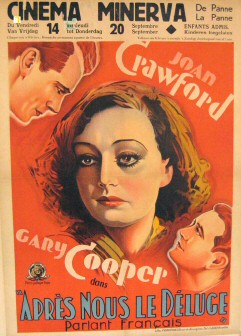
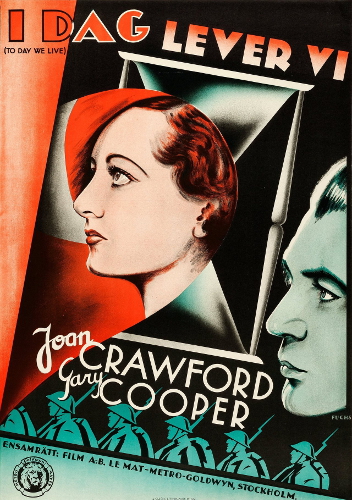
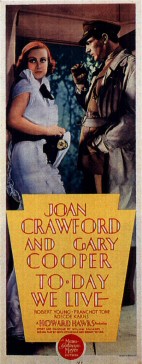
Above: Belgium, Swedish one-sheet, and unknown.
Below: Spain.
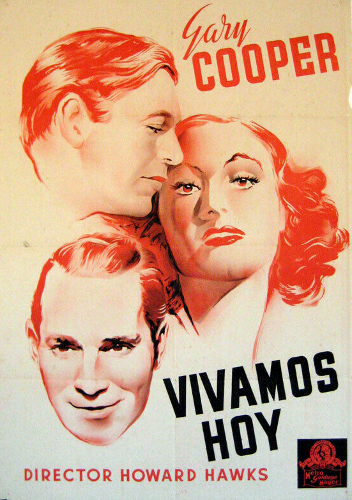
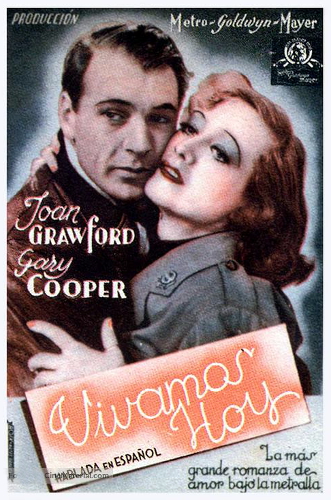
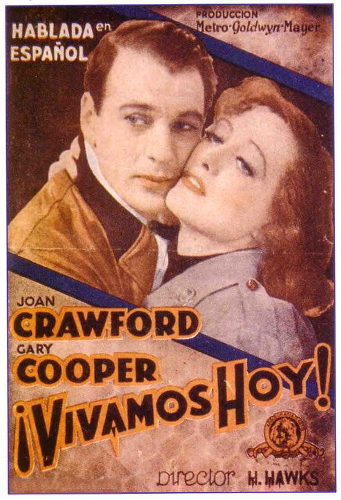
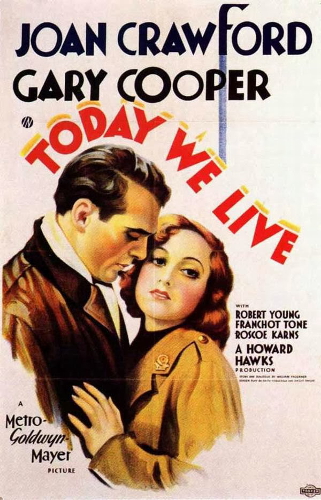
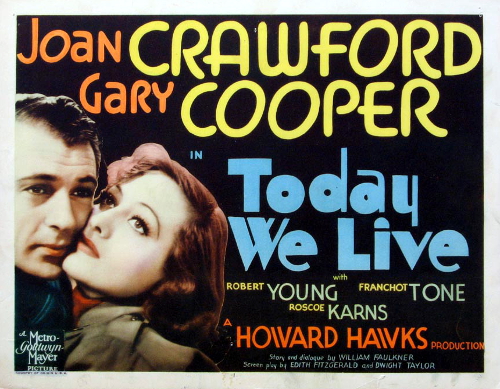
Above: US one-sheet and half-sheet.
Below: Unknown.
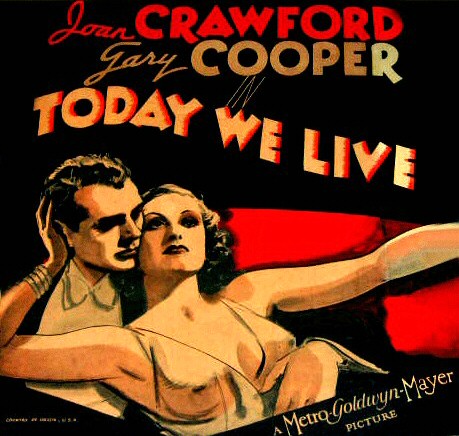


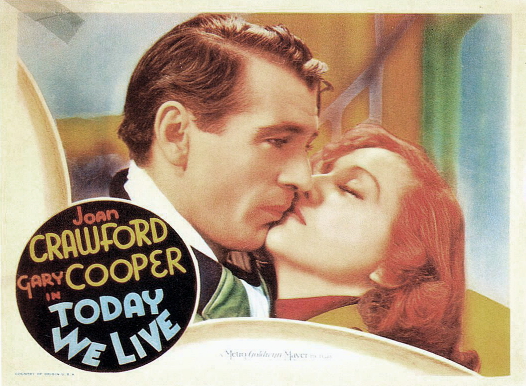
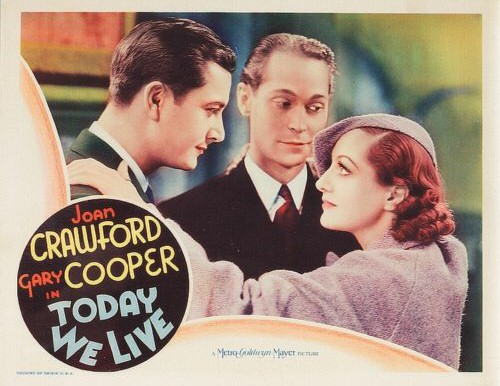
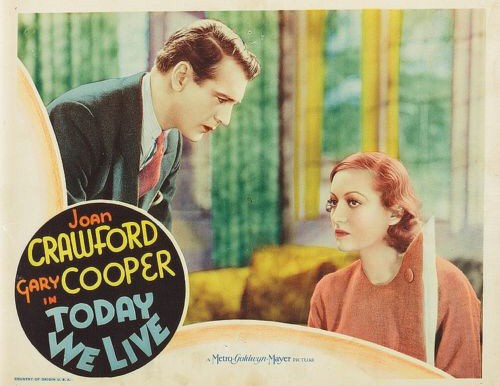
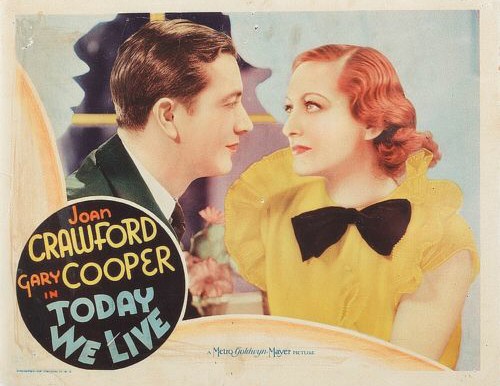
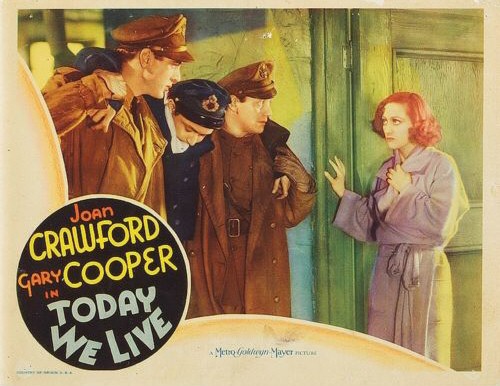
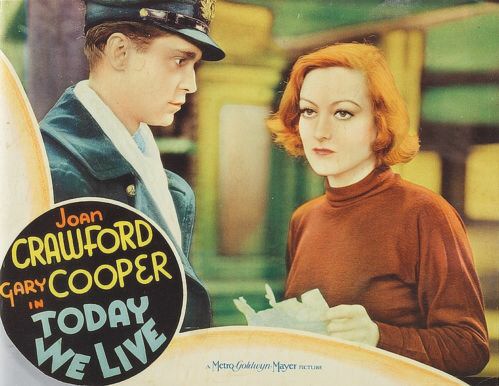
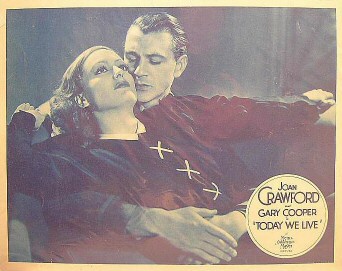
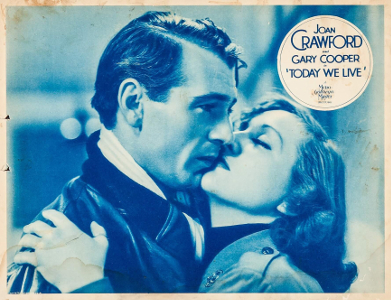
Above: US lobby cards. Below: UK lobby cards.
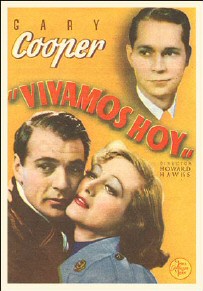
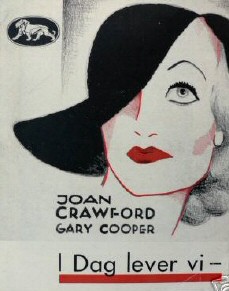
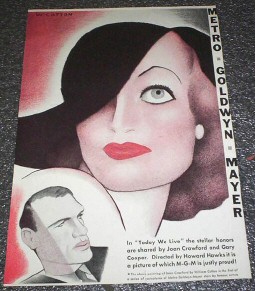
Above: Spanish herald, Danish program, and US trade ad.
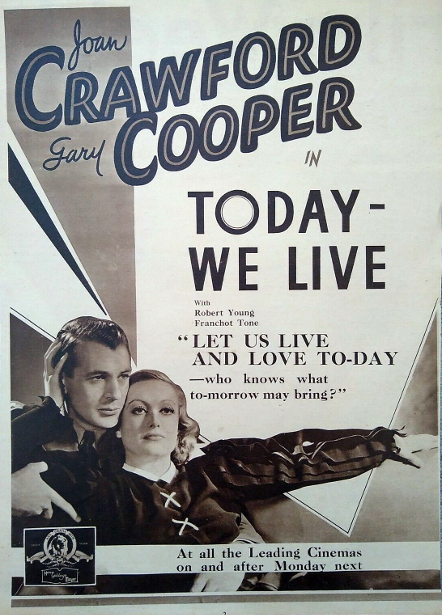
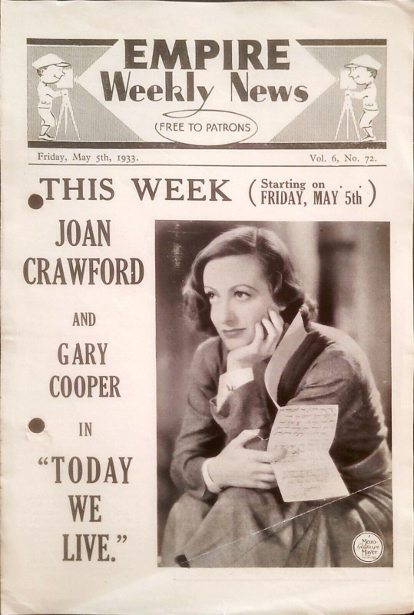
Below: US trade ad, UK ad from Film Weekly, and London program cover.

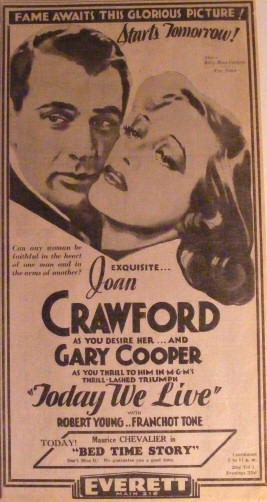
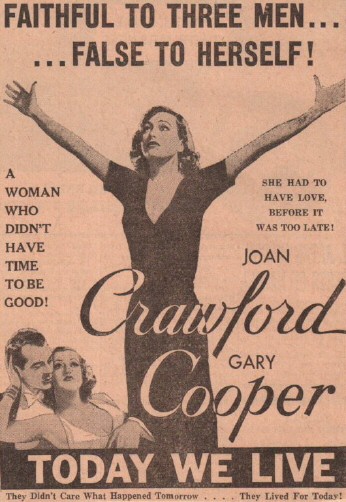
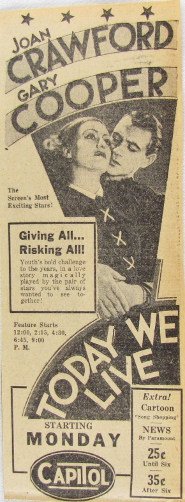
Above: US newspaper ads.
Below: Canadian glass slide.

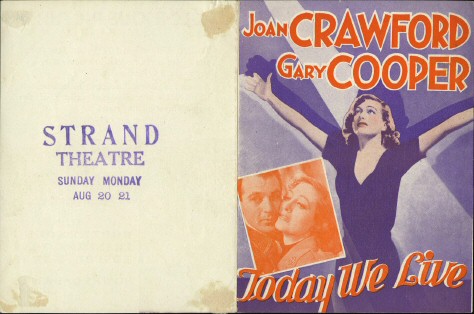
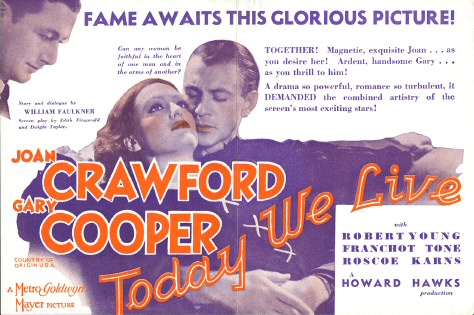
Below: US herald cover and centerfold.
 Yola
Mokdissi (January 2025)
Yola
Mokdissi (January 2025)
 Tom C. (July 2023)
 of 5
of 5
 Stephanie
Jones
Stephanie
Jones