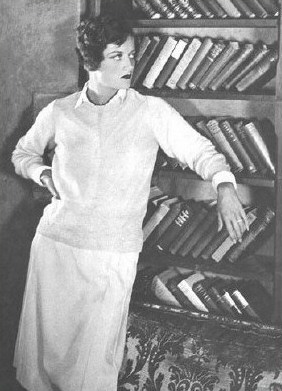
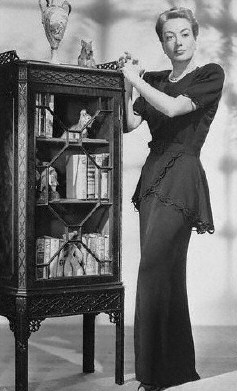
Fabulous!
A Loving, Luscious, and Lighthearted Look at Film from the Gay Perspective
(2004, Dell)
Donald
F. Reuter
Description:
PB, 192 pages. 4 Joan films reviewed: The Best of Everything,
Mildred Pierce, What Ever Happened to Baby Jane?,
and The Women.
The Fairbanks Album (1975)
Introduction and
Narrative by Richard Schickel
Description: A collection of photographs, clippings, film
stills and letters from the collection of Douglas Fairbanks Jr. and Mary
Pickford which tells the story of Douglas Fairbanks Sr. and Jr.'s lives.
Includes some photos of Joan and Doug both privately and in "Our Modern
Maidens."
Sample Text:
The
marriage lasted only four years, but Fairbanks still regards her as a shaping
influence, saving him from being "overwhelmed" by various parental pressures,
encouraging him to "strike out on my own in a large way, to grow up and be my
own man, independent and challenging."
Film-Lovers' Annual (1932, Dean
& Son Ltd., London)
Description: Hardback with full-color cover. 156 pages inside are black
and white, some are sepia tone. Photos, blurbs and stories about: Janet Gaynor,
Richard Arlen, Maurice Chevalier, Lilian Bond, Buster Keaton, Clive Brook, Clark
Gable, Sylvia Sidney, Kay Francis, Myrna Loy, Anita Page, Wallace Ford, Jean
Harlow, Ricardo Cortez, Dolores Del Rio, Douglas Fairbanks, Jr., George Arliss,
Miriam Hopkins, William Powell, Irene Dunne, Barbara Stanwyck, Leslie Howard,
Marlene Dietrich, Laurence Olivier, Edward Robinson, Claudette Colbert, etc.
Some films covered in this annual are: Arsene Lupin, Good-Night Vienna, The
Miracle Man, Destry Rides Again, Tarzan the Ape-Man, Sunshine Susie, Hell
Divers, Emma, Delicious, Arrowsmith, It's Tough to be Famous, Around the World
in 80 Minutes, Sidewalks of New York, Men Like These, The Champ, the Melody of
Life, Mati Hari, Daddy Long Legs, Dirigible, Shanghai Express, The Viking, Tabu,
Forbidden, The Faithful Heart, Grand Hotel and others.
The Films of Clark Gable (1970)
Gabe
Essoe
Description: Similar to The Films of Joan
Crawford - an overview of every film Gable made. Each film is given a
detailed synopsis and a reprint of the press reviews given at the time each film
was released. The book also includes publicity photos from each film and several
chapters devoted to Gable's friends and co-stars' memories of Gable. There is
also chapter called Joan Crawford Remembers Gable.
 Four
Fabulous Faces (1970, Galahad)
Larry Carr Four
Fabulous Faces (1970, Galahad)
Larry Carr
Description:
492 pages, 84 on Joan. The other three "fab faces"
are Garbo, Dietrich, and Swanson.
The Genius of the System (1988)
Thomas
Schatz
Description: From the
dust jacket: ...the first complete portrait of moviemaking in Hollywood's
classic studio era. Incisive, entertaining, and based on actual industry
documents -- memoes, production reports, story conference notes, personal
correspondence -- this book cuts through the hype and half-truths, the anecdotes
and legends, to get at how the studio system actually worked. The book
describes the background of two of Joan's films, Grand Hotel and Mildred Pierce.
Get
Happy (2000) Gerald Clarke
Description: A biography of actress Judy Garland. Includes some
anecdotes about Joan and mentions briefly how Joan was present at Judy's 19th
birthday/engagement party.
Gone But Not Forgotten (1981) Patricia Fox-Sheinwold
Description: From the dust jacket: "...effectively
details the triumphs and tragedies of the famous. These celebrated individuals
have constantly dazzles the public with the drama and glamour of their everyday
lives...is a loving tribute to those whose stars have burned brightest and who
have attained immortality through fame."
Includes chapters about W.C. Fields,
Charles Chaplin, Groucho Marx, Jack Benny, Buster Keaton, Spencer Tracy,
Clark Gable, John Wayne, Mae West, Rosalind Russell, Betty Grable, Bing Crosby,
Alfred Hitchcock, Walt Disney, etc. There are several pages devoted to Joan,
filled with lots of pictures and interesting pieces of information such as the
following (and I believe this is the only book I've ever read that claims
this):
Sample Text:
But the
big event at that time, one that has been kept locked up in the Hall of Records,
was her first marriage. When she arrived in Hollywood after a successful screen
test to accept MGM's offer, the marriage was verboten: "Because starlets
in those days testified that they were unmarried, which was the rule. Since she
[ Joan ] didn't drive in those days, Jimmy had to drive her daily to the studio
at the crack of dawn and then pick her up while trying to keep out of sight. The
marriage wore thin and they divorced in the middle or late 20's in
California."
The groom in question was James Barratt Welton, now
deceased, and the marriage was performed while Joan was working in New York
City. source: Mrs. James Welton
The Great Movie Stars: The Golden Years (1970)
David
Shipman
Description: An alphabetical
overview of "Golden Years" celebrities. The book concentrates on the film career
of each celebrity and offers basic info and the author's opinions of the role.
Photos are included within the text. A few pages are devoted to
Joan.
The Great Romantic Films (1974) Lawrence J. Quirk
Description: From the dust jacket: A lavishly
illustrated retrospective of the best-loved motion pictures in the romantic
tradition, from the infancy of the sound era until the present day. The book
ranges through fifty landmark films which, in the author's opinion, best
exemplify the romantic mystique...Every film is documented with a synopsis, cast
list, credits, and an evalution of the work's critical and audience reception at
the time of its release -- and how its popularity has continued throughout the
years. Joan's films A Woman's
Face and Humoresque are
detailed.
Hollywood and the Supernatural (1990)
Sherry
Hansen-Steiger and Brad Steiger
Description: An account of the occult and paranormal events
that have occurred in Hollywood. Joan's daughter Christina is interviewed for
the book and claims surprise that the authors are aware of the haunting
manifestations that took place in Joan's Brentwood home. "Not many people know
that the house I grew up in may be haunted...it is not in print anywhere," says
Christina. She then goes on to describe "cold spots" in the home and ghostly
child apparitions. The authors claim the current (as of 1990) owner of the home
had called in the Reverend Rosalyn Bruyere of the Healing Light Center to work
on the house. Bruyere is interviewed and says that all the owners of the home,
beginning with Joan have had "terrible things happen...illnesses, alcoholism,
addictions, relationship problems...and the walls breaking out in flames...in
particular it's the wall that was behind Crawford's bed." Furthermore, Christina
says she is willing to believe that Joan's spirit currently haunts the house and
that "She was capable of real evil." Finally, Bruyere says that the house had
been poisoned in some way before Joan even moved in, saying that the evil only
added to her neuroses. Bruyere performed an exorcism on the home and found the
haunting existed on several levels, calling the home "...a place of conspicuous
negativity...an 'Astral Central'...people have been tied up and tortured in that
house...there is an area of the house where a child [not Christina] had been
tortured and molested." Bruyere says that spirits have been trying to burn down
the home (hence the burning walls) but that since her exorcism, there has been
only one recurrence.
Complete excerpt.
Hollywood at Your Feet (1992)
Stacey Endres and
Robert Cushman
Description: The
story of the world-famous Chinese theatre from the silents to Star Trek, this
book details the 154 hand and footprint ceremonies from 1927 to 1991. Joan's
ceremony on September 14, 1929 (placed in connection with Our Modern Maidens) is
recounted by both Joan and Douglas Fairbanks Jr. via their memoirs. Joan's
square is tinted gray and contains the inscription "May This Cement Our
Friendship.", the date, her two footprints (made with high heels), two
handprints, and her signature.
Sample Text:
Crawford
was accompanied by her husband Douglas Fairbanks, Jr. and recalled the following
anecdote in her memoirs: "As soon as the picture [Our Modern Maidens] was
finished, we put our footprints in the courtyard at Grauman's Chinese Theatre
and slipped away to New York [to be married]." She was mistaken on two counts.
She and Fairbanks had already married in June 1929, and he was not asked to
place his prints alongside hers.
Hollywood Babylon (1975)
Kenneth
Anger
Description: Devoted to Hollywood
scandals and mysteries, this book features a photo of Joan from
"Possessed."
Hollywood Babylon II (1984)
Kenneth
Anger
Description: A sequel to
the first book and similar in its pursuit of revealing the sordid Hollywood
scandals and mysteries, this book features a chapter on Joan's life-long friend
Billy Haines and the scandal that surrounded his exile from Hollywood over his
refusal to not disclose his homosexuality. The book also includes several photos
of Haines with Joan and a chapter devoted to Joan called "Witch Joan" and
features some early publicity photos and the legendary "nude" pictures. There is
also a picture of Joan with her mother, Joan with her adopted children, Joan in
an advertisement for "RC Cola", Joan asleep with her Oscar and Joan at her last
public appearance in 1974.
Hollywood Candid: A Photographer Remembers (2000)
Text and
Photographs by Murray Garrett
Description: A collection of candid photographs and
remembrances by Murray Garrett. These photos originally appeared in LIFE,
Time, Look, and other national magazines shortly after they were
taken. There are four photos of Joan included: on a sound stage at NBC radio
recording Saturday Afternoon with Robert Young, with Ethel Barrymore, at a
premiere with her children and dancing with Cesar Romero.
Hollywood Color Portraits (1981)
John
Kobal
Description: A collection
of color portraits of Hollywood greats including Bette Davis, Ann Sheridan,
Veronica Lake, James Cagney, Clark Gable, etc. A photo of Joan reclining in her
bed on the set of Queen Bee is included.
Hollywood Dogs (1993)
Edited by J.C.
Suares
Description: A collection
of photos taken of Hollywood celebrities and their dogs. Includes two photos of
Joan, one from 1929 and the forties.
Hollywood's Great Love
Teams (1974) James Robert
Parish
Description: From the
dust jacket: Great love teams won the fans right from the start as Francis
X. Bushman and Beverly Bayne, Harold Lockwood and May Allison pitched passionate
if mute woo. These were the ancestors, but the best was yet to come. Mr. Parish
focuses on them -- the 28 most popular teams ever to sigh sweet nothings to each
other.
The book lists each film Joan and Clark Gable starred together in and
includes two pages of black-and-white photos of them together. A brief synopsis,
background information and review is given for each of the films in which they
starred together.
The Hollywood Greats (1979)
Barry
Norman
Description: From the
dust jacket: "In his probing appraisal...based on the highly successful
BBC TV series...Barry Norman portrays the lives and personalities of these ten
stars (Clark Gable, Errol Flynn, Spencer Tracy, Gary Cooper, Humphrey Bogart,
Joan Crawford, Ronald Coleman, Jean Harlow, Judy Garland and Charles Laughton).
His interviews with their friends, lovers, wives, husbands and children, and
also with those who made and directed their films, reveal some fascinating and
surprising facts..."
After giving the basic condensed facts, this book seems
to be very interested in surprising its reader with shocking revelations such as
Charles Walters (Joan's director on Torch Song) saying that Mary Pickford
once told her if Joan gave her grandchildren she'd kill her, or Natalie Schafer
(Joan's co-star in Reunion in
France and Female on the Beach)
revealing the fact that Joan had studio policemen guard her dressing room for
fear Schafer would glance into her mirror (she also recounts the infamous story
of how Joan punished son Christopher for having one too many pieces of
chocolate). Greg Bautzer (Joan's on-and-off boyfriend in the forties) relates
the story of Joan's abuse of Christopher because the boy was
left-handed.
Sample Text:
Today,
again with hindsight and admittedly without the benefit of ever having known
her, it appears to me that Joan Crawford was totally unreal. Joan Crawford was a
film star and that's all she was. That was all she ever wanted to be. She was
the very epitome of a film star, the most durable of all the female stars in
Hollywood and she played the part with relentless dedication for twenty-four
hours a day, every day of her life.
Hollywood Heavies (1994)
Edited by J.C.
Suares
Description: A collection
of portraits of past and contemporary Hollywood "heavies" such as Edward G.
Robinson, Bette Davis, Humphrey Bogart, Barbara Stanwyck, Arnold Schwarzenegger,
etc. Includes three photos of Joan taken from Queen Bee, The Women, and Harriet Craig.
 Hollywood Jewels (Abrams, 1992)
Penny Proddow,
Debra Healy, and Marion Fasel Hollywood Jewels (Abrams, 1992)
Penny Proddow,
Debra Healy, and Marion Fasel
Description: From the dust jacket: "Hollywood means make
believe. But, believe it or not, much of the jewelry worn on the screen by the
great Hollywood stars of the past - and many of the present - is the real
thing...Photographs from these films and dozens more, along with exquisite color
photographs of the jewels themselves, fill these pages."
The book includes
several publicity photos of Joan, an inventory from Raymond C. Yard's ledger of
gems for her star sapphire bracelet dated February 11, 1938 and pictures of her
jewelry including her feather brooch by Ruser (which was worn by Mildred Pierce in the film of
the same name -- the scenes were cut), her marquise-cut diamond earrings, her
baguette-cut diamond riviere by Ruser (both mounted in platinum), her poodle
brooches and three charm bracelets.
Sample Text:
When
shopping for her cabochons in the 1930's, Joan Crawford went to an exclusive East
Coast jeweler. Known for dramatic roles projecting inner strength,
self-sacrifice, or sophisticated villainy, offscreen the actress projected a
hard, knowing look. In a 1932 Photoplay article entitled "Spend!" she
made it clear that she regarding spending as an almost sacred duty. In the
depths of the Depression, she expressed a unique type of patriotism: "I, Joan
Crawford, I believe in the Dollar. Everything I earn, I spend." In this pursuit
she worked her way to the top, making her way by 1938 into the very select
clientele of New York jeweler Raymond C. Yard, a firm that never advertised.
From them, among other things, she picked out a wide fancy-cut diamond bracelet
punctuated with star sapphires. The center stone weighed 73.15 carats and the
two side stones 63.61 and 57.65 carats. The bracelet became the prime attraction
of her suite of cabochon sapphires that the press dubbed Joan Blue in her
honor.
Click here to see 12
photos and excerpts from the book. (Thanks, Vincent!)
Hollywood Poolside (1997)
Frans Evenhuis and
Robert Landau
Description: A
collection of photographs of celebrities taken at or in the pool. The photos,
originally intended for fan magazines, comprise this "family album" and explore
the realities behind the images to create a nostalgic and telling study of
Hollywood myth-making. Includes a photo of Joan circa 1933 signing autographs
poolside, Joan and Douglas Fairbanks Jr. sitting on a diving board circa 1931,
Joan in the back yard by the pool of her Brentwood home circa the forties and
publicity photos from Chained
and Dancing
Lady.
 Hollywood
Portraits (2000, Amphoto Books) Roger Hicks and Christopher Nisperos Hollywood
Portraits (2000, Amphoto Books) Roger Hicks and Christopher Nisperos
Holly-Would! (1974) John
Milton Hagen. Illustrated by Feg Murray.
Description: A collection of silver-screen non-sequiturs that
ran in movie columns in the early days of filmdom. John Milton Hagen, a fixture
of the period and the man responsible for perpetrating most of the zinging
one-liners that were once viewed as gospel truth by avid readers, has collected
over 2,500 of his best capsule commentaries. Also includes illustrations by Feg
Murray, a syndicated cartoonist. Joan is mentioned several times throughout the
book which provides us with a peek into how stars were portrayed to their
audiences (sometimes incorrectly) by the huge Hollywood publicity
machine.
Sample Text:
JOAN
CRAWFORD, 'tis whispered, has two heads of hair. One is her own - as lovely a
thatched roof as ever the sun shone upon. The other cranial covering was sent to
her by a woman admirer, who learning that Joan was to wear false hair in a
certain picture cut off all of her hirsute adornment and sent it to the
star!
Horst: Salute to the Thirties
(1971)
Description: Published in the UK, 192 pp. Horst
P. Horst photographs from Vogue and Vanity
Fair.
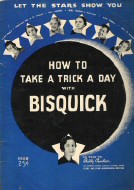 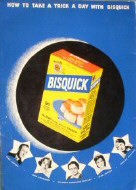 How to Take a Trick a Day with Bisquick
(1935, General Mills) As told to Betty Crocker How to Take a Trick a Day with Bisquick
(1935, General Mills) As told to Betty Crocker
Description: A cookbook featuring film stars and famous
people of the era and how they use Bisquick recipes with meal planning. The book
is 9 x 6-1/2 inches, 40 pages, and includes several full color photos of the prepared food and
blue-toned photos of stars and celebrities. Includes photos of Joan, Dick
Powell, Bing Crosby, Beulah Gillespie, William Gargan, Bette Davis, May Robson,
Clark Gable, Warren William, Jean Parker, and others.
Click here
to see larger covers, TOC, and the page with Joan's menu.
 Hurrell's Hollywood Portraits (1997, Harry N. Abrams)
Mark
A. Vieira Hurrell's Hollywood Portraits (1997, Harry N. Abrams)
Mark
A. Vieira
Description: 223 pages. From
the dust jacket: "This book presents in depth the work of George Hurrell,
the photographer who more than anyone else was responsible for inventing the
Hollywood "glamour" portrait - the essential publicity tool for the major
studios during the Golden Age of the movies. The book traces his immense impact
on the portrayal of the leading stars year by year, from his arrival in
California in 1925 until his departure in 1943. During that time he photographed
all of the greatest personalities at Metro-Goldwyn-Mayer, Warner Brothers, and
Columbia as well as independently."
Joan and husband Franchot Tone appear
on the cover; there are numerous photos of Joan and
large sections of the text are devoted to Hurrell's work with and admiration for
her. Includes a before-and-after photo of Joan showing how after six hours of
retouching, her freckles were nonexistent.
Sample
Text:
If her face was Hurrell's favorite, it was because it
photographed the same from every angle. It was camera-proof. Its only problem
angles involved her right rear jaw, which was a little heavier, and the bridge
of her nose, which was so slender that it could make her nostrils look too
large.
The Hurrell Style (1976)
Photographs by
George Hurrell; text by Whitney Stine
Description: From the back cover: "The photographs of
George Hurrell epitomize the glamour and style of Hollywood. A leading
photographer there since 1925, Hurrell has photographed them all: Garbo,
Dietrich, Harlow, Cagney, Gable, Rita Hayworth, Robert Taylor, and many
more...Here are Hurrell's most breathtaking photographs - and text in which he
discusses his methods for evoking the charismatic images that came to define the
stars."
There are numerous photographs of Joan and also Hurrell's anecdotes
about working with her.
Sample Text:
Crawford
never grew irritated or bored with posing. She was Hurrell's most enthusiastic
subject. They made something of a record when he exposed five hundred plates in
one setting. After that session, St. Hillaire collapsed from fatigue after
loading so many holders, and Hurrell, completely spent, took of the next day, a
Friday, and spent the entire weekend in Carmel painting landscapes.
"I'd Love to Kiss You..." (1968)
Whitney
Stine
Description: From the
dust jacket: Illustrated with exclusive photographs, many from the author's
collection, "I'd Love to Kiss You..." is the ultimate Bette Davis book, as
fascinating and vivid as a tete-a-tete with Miss D. herself. Joan is mentioned
briefly throughout the book and several pages are devoted to Davis' thoughts on
Joan.
Sample Text (Various comments about Joan by
Bette):
"Joan's peculiar. You know, on Jane she wouldn't even
shake hands with anyone. She always carried disinfectants with her and she'd
scrub the john on her hands and knees. I think it was because she had a venereal
disease when she was a kid, and as she got older it preyed on her mind. Her
apartment in New York has plastic sprayed on the walls and the furniture is
covered with the stuff."
"I would have liked to have some of the roles Crawford got at Metro in
the 1930s. I was given little secretaries and gun molls, while she was doing
some really interesting parts."
"She is such the great star. Little Miss Perfection. But yes, I suppose
have the same drive. She's a survivor, and so am I. And, I suppose I do
infuriate people the same way she does."
"For some reason I'm thinking of Joan Crawford in Mildred Pierce.
She had a hell of a time looking like a waitress -- apparently, she has
done everything in her life but wait tables!"
I Still Talk To... (2000)
Kenny Kingston as
told to Valerie Porter
Description: The book has twelve pages of an
interview conducted with Joan from beyond the grave. In her latest interview Ms.
Crawford states that The Damned
Don't Cry was the film title that fit her life best. She also claims to
have cursed or haunted her Brentwood Home but now it is time for "...the
curse to be lifted." She admonishes us not
to "...believe everything that Christina says. Her major problem was that she
wished she'd been born Joan Crawford. When she wasn't, she tried to be even more
popular. I feel sorry for her. I tried to give her love in my way. I gave too
much to my children - a home, servants - they didn't appreciate it." She goes on to say
lots of things such as "I was a
little weird, but I was not a lesbian. I'll never ever divulge the truth of when
I found out what I really was, but let's say, I discovered my own sexuality. I'm
talking about what I really was."
She supposedly
gossips about Jackie Cooper, Rock Hudson, and makes a veiled reference to
Loretta Young. She allegedly discusses being drunk on talk shows and her love of
animals in the next plane of existence. Kingston claims she sees friends like
Gable and Spencer Tracy who's "...waiting
patiently for his true love," also Barbara Hutton,
Natalie Wood, and of course Bette Davis. She goes on to say "...don't
ask if we've made up. I have nothing to reconcile with Bette Davis. All the
fights were done as a publicity campaign as far as I'm concerned. everything was
premeditated. She may have thought I was only a personality. Well, it's true, I
was a personality but I think winning an Oscar should have been sufficient proof
I was also an actress. But she fought hard to be a star - even harder than I
did. If she had to kill, she killed." Joan refuses to
elaborate on or explain this last remark. Joan claims she enjoys watching
performances by Meryl Streep and Glenn Close. Madonna should "...pay to
have her picture in the paper! No class; no dignity. Cher - she won an Oscar for
that cute little thing she did, but she doesn't even dress like a star. She
dresses like a burlesque queen! I'd like to have had her on my freezing
sets!"
Then she discusses her passing over: "I had a
struggle when I passed. Not because of illness or physical pain. I don't care
how they listed my passing - cancer, heart - I simply couldn't fight anymore. I
lost my desire at an important moment. The struggle came because, just near the
end, I wanted the desire back again, but it was too late. I'd slipped too far
and I couldn't recharge the old battery. One woman could have saved my life if
I'd let her - Doris Lillie. She wanted to help me, But vanity and pride took
over and I refused everyone. I wanted loved ones with me, but I wanted it all
too late." Kingsley claims that
Joan is working in the beyond "...teaching people here how to avoid being victims of the bottle so that
when they're reborn, they won't have problems. But let me tell you something
else I've learned. Closeness- the human touch - that's what I lacked, perhaps,
and what I'm learning to develop now."
Her final word
of advise to fans are "Practice
your penmanship! Write to your loved ones - say things on paper you might not
say otherwise. Sends compliments - write thank you's. Write..."
The Illustrated Encyclopedia of The World's Great Movie Stars
(1979) Ken
Wlaschin
Description: The title
pretty much says it all: The giant figures of the Silent, Classic, and Modern
film eras are highlighted with over 400 photographs, posters and memorabilia.
Each section is preceded by an introduction that sets the scene for each era,
capturing the glamor, beauty and behind-the-scenes intrigue. The biographies of
the stars that follow include a listing of best films for each actor, giving the
date of release, and the name of the director and studio.
Jeff
Chandler: Film, Record, Radio, Television, and Theater Performances
(2005, McFarland) Jeff
Wells
Description:
Includes section on Joan's and Chandler's "Female on the
Beach."
Lamparski's Hidden Hollywood (1981)
Richard
Lamparski
Description: A
collection of photos and addresses of the former homes, haunts, graves, studios,
murder and suicide scenes of Hollywood's Golden Age. Includes a photo of the
Hotel Washington (where Joan first lived when she arrived in Hollywood in 1925),
St. Augestine's Roman Catholic Church (where Joan prayed that her career would
continue to grow), Joan's home at 426 North Bristol, Joan's handprints at
Grauman's Chinese Theatre, Joan's star near Hollywood Blvd., her 1933 Cadillac
V-16 Town Car and photos of the What Ever Happened to Baby Jane?
home.
The Leading Ladies (1977)
James
Robert Parish and Don E. Stanke
Description: From the dust jacket: "Each had her own
very special blend of glamour, persistence, and magnetism. One was a flippant,
saucer-eyed, wisecracking blonde. Another was a sharp-edged, rugged
individualist. A third was delicate-looking, demure, a pretty heroine with great
reserves of strength. All were uniquely themselves. But they had one thing in
common: the perseverance and adaptability to survive in Hollywood for four
decades. They were the six great, indestructible Leading Ladies."
Focuses on
the lives and films of the following: Joan Crawford, Bette Davis, Olivia de
Havilland, Rosalind Russell, Joan Blondell and Barbara Stanwyck. 184 pages are
devoted to Joan and include some great photos, personal information and a long
list of films that Joan was to appear in but never did.
Sample
Text:
Perhaps the best accolade came from the enthusiastic fans
themselves over the decades. Some years ago as she left the 21 Club in
Manhattan, Crawford was confronted by a gang of construction workers. One
yelled, "Hey, Joanie!" Ever the gracious movie star in public, she shook hands
cordially with many of them. One of their number studied her carefully and then
remarked, "They don't make them like you anymore, baby." They certainly do
not...
Looking for Gatsby (1995)
Faye Dunaway with
Betsy Sharkey
Description: Faye
Dunaway's autobiography. Includes some of Dunaway's thoughts on Joan and
Christina Crawford and the making of Mommie Dearest.
Sample
Text:
...The danger in finding your way deep inside a character is
that you can get lost in there. Some get so close that they come and live with
you a while. Years later when I was doing Mommie Dearest there were nights I
could feel Joan Crawford's presence in the room, sitting in the
window.
Looking for Jackie: American Fashion Icons
(1999) Kathleen Craughwell-Varda
Description: From the dust jacket: "This engaging
illustrated book celebrates the flair and independent spirit of thirteen women
whose distinctive styles captures the imagination of the American public and
shaped popular fashion. From Dolley Madison and others who resided in the White
House, to Elizabeth Patterson Bonaparte and Grace Kelly, both of whom entered
the realm of European nobility; from Hollywood legends like Gloria Swanson and
Katharine Hepburn, to current fashion icons like Madonna - all of these powerful
and glamorous women were embraced by the general public, and gave average
Americans the confidence to adopt and wear a new look."
A chapter
consisting of twelve pages is devoted to Joan and includes several publicity
photos from films such as Our
Dancing Daughters, Letty Lynton and Rain.. Also included are the posters for
Rain and Letty Lynton; an ad for
"Joan Crawford Hats," and fashion designer Adrian's sketches from Letty Lynton.
Sample
Text:
Somewhere along the line, pudgy Lucille Le Sueur from Kansas
City was permanently subsumed by the larger-than-life persona created at MGM -
and Joan Crawford seemed perfectly happy with the transformation. She always
played to her fans, was kind and supportive to photographers, and never left
home without the perfect makeup, coiffure, and clothes. "I never go out on the
street unless I expect and anticipate and hope and pray that I'll be recognized.
That someone will ask for my autograph. When they do, Im prepared and ready and
as well dressed as I possibly can be. And when somebody says, 'There's Joan
Crawford,' I say 'It sure is!' "
 Lovers
(1992) Linda
Sunshine Lovers
(1992) Linda
Sunshine
Description:
204 pp. Diane Publishing Company.
A look at the
16 greatest love teams in American cinema, featuring
a lengthy section on Joan and Clark Gable.
Click here
to read the full Joan/Clark chapter. (Thanks
to Kristy for the scans.)
Lucy in the Afternoon (1990)
Jim
Brochu
Description: Similar in
style to Crawford: The Last Years, Brochu describes
his experiences with Lucille Ball in the last nine months of her life. He also
relates his experiences with Joan and says that Lucy was eager to hear all about
it. He describes how in the summer of 1960, he was traveling to South America on
the S S Brasil with his widower father, who learned that Joan was also on board.
Eager to meet her, Brochu's father Peter inquired as to when Joan would be
around. It was Jim, however, who met Cindy and Cathy, Joan's adopted daughters.
They brought Jim back to their room where he met Joan. Later at dinner, Jim
introduced his father to Joan (strangely, in a book devoted to Lucy, there is a
photo of Jim, the twins, Joan and his father in the center of the book). Peter
and Joan then began a short-lived romance. Jim continued his friendship with
Joan and describes an evening in her apartment on Fifth Avenue that he feels
gives insight into Joan: she greets him in an old bathrobe, turban and wearing
no make-up, relates to him how the whole world has expectations of who Joan
Crawford should be - a star. Finally, he asks Lucy about her experiences when
Joan appeared on her show (see below):
Sample Text:
I asked
Lucy how the experience of working with Crawford had been. She told me she fired
her after the first rehearsal. "She was drunk. She showed up at ten o'clock in
the morning for the first read-throughs, and she was bombed. She was drinking
straight vodka from this silver flask, and she was drinking it in front of the
kids. She was saying all the words, but it was like she was a robot. About
lunchtime, Joan passed out cold, and that did it. As soon as she woke up, I
fired her."
Herb Kenwith, the show's director and an old friend of
Crawford's, begged Lucy to give her another chance. Crawford, after her revival,
said the heat had gotten to her. Lucy gave her another chance, and Crawford did
finish the show. Lucy admitted it was one of the worst.
The MGM Girls (1983) Peter
Harry Brown & Pamela Ann Brown
Description: The authors Brown relate the stories of numerous
movie queens that audiences associated with the MGM studios and Louis B. Mayer.
The life and career of such notable actresses such as Judy Garland, Lana Turner,
Jean Harlow, Norma Shearer, Greta Garbo, Marion Davies, Barbara LaMarr and Joan
Crawford are covered in various chapters. The authors claim that Louis B.
Mayer's "control" over these women either ruined or damaged their personal and
professional lives.
The book contains numerous pages and photos of
Joan.
Sample Text:
A stylish, romantic script, Letty Lynton, had been
fashioned for Joan with Clark Gable in mind as the co-star. "Get over to this
office, and get over here right now," ordered Mayer, finding Joan undergoing
fittings in the costume department.
In a white, ruffled, trailing
chiffon, she ran the half mile to the throne room. "I'm not going to tell you
what I think about 'your problem with Clark,' " he said. "But you and Gable wil
not be together on this picture. The romance will stop. Or you know what will
happen."
Joan Crawford walked onto the set of Letty Lynton in her
billowing white dress five days later and worked with the Clark Gable substitute
as is he was her ideal leading man. But ten minutes after shooting ended on the
first day, Clarence Brown saw her crying, her head on the dressing
table.
MGM Posters: The Golden Years (1998)
Text by Frank
Miller
Description: From the
dust jacket: "A decade-by-decade visual history of MGM, featuring arresting
examples of every film genre and virtually every major star of Hollywood's
Golden Age. Like the movies they represent, these posters demonstrate a
stylistic evolution in response to changing trends and audience exceptions.
Here, in the exciting medium of poster art, are MGM's legendary stars and
one-hit wonders, the classics and the time-wasters, brought together for the
first time in a beautiful volume." Includes posters from numerous Joan
films.
The MGM Story (1975)
John Doulas
Eame
Description:From the
dust jacket: "This book is the first to detail, discuss and illustrate the
entire output of one of the great movie companies. A total of 1,714 films are
covered individually in text and pictures." Includes publicity photos and
brief information from each of Joan's films with MGM.
The Million Dollar Mermaid (1999)
Esther Williams
with Digby Diehl
Description: From the dust jacket: With a sharp mind and
a rapier wit, Esther Williams brings to life those times and those
bigger-than-life people, telling her stories with respect, yet with clear-eyed
candor. Filled with behind-the-scenes gossip and tales of real life in a fantasy
world.
Williams describes her experiences with Joan during the filming of Torch Song.
Sample
Text:
Once she'd made her grand departure, I got myself together
to go home, but as I was leaving I heard some noises coming from Stage 4. It
sounded like yelling, so I walked over to take a look. Stage 4 was where they
did all the show business pictures, because it was set up like a theater. The
house was dark; no one was in the audience. There was nothing on but the work
light in the center of the stage; in the far corner a janitor was sweeping up.
Downstage under the middle of the proscenium arch was Joan, still in her bird
outfit, talking to the empty seats.
I
stood there and listened in the darkness as she cried out, "Why have you left
me? Why don't you come to my movies? What did I do? What did I say? Don't turn
your back on me!" Joan had been star since the 1920s, with an Oscar and a fine
body of work behind her, but here she was, almost fifty, reduced to begging an
imaginary audience not to forget her. Tears were streaming down her face,
streaking her copper makeup. Suddenly she looked old and pathetic. I slipped
away without her noticing.
More Than a Woman (1993)
James Spada
Description: Biography of Bette Davis. Joan
is mentioned briefly throughout the book: Bette attended a screening of Our Modern Maidens; Bette
was having an affair with Joan's husband Franchot Tone during the filming of I Live My Life; Joan sent gifts to
Bette in 1944 which Bette interpreted as being of sexual intent; Joan attempted
to seduce Bette's husband Sherry; Joan and Bette feuded on the sets of both
their films.
Sample Text (Bette's comments about Joan's appearance on What's My
Line?):
In response to hearing that Joan had performed with a
Southern accent: "Well, my deah. She did the whole Suth-in bit eith
us, you know. She was all Suth-in. Was her hair white? Or did she have a
turban? Did she say, 'Bless you'? Did she say, 'Bless you, John,' 'Bless you,
Arlene'? I'm sure she did. She says 'Bless you' to everybody! She's such
a doll! She's just as sweet as..."
The Movies [Revised Edition] (1970)
Richard Griffith
and Arthur Mayer
Description: Packed with numerous movie stills, this book
chronicles the birth of the movies through the revolutionary sixties. Numerous
photos and anecdotes about Joan and her films are scattered throughout the
book.
My Life in Three Acts (1990)
Helen Hayes with
Katherine Hatch
Description: An
autobiography of the acclaimed "First Lady of the American Theatre," the book
details Hayes' personal and professional life. A small part of chapter seven is
about Hayes' experiences with Joan. She recounts taking a friend to meet Joan
and Joan showing them her collection of dresses, coats and shoes; she also
states that Joan "adopted" her as a best friend and that she never quite
understood why this happened. She goes on to detail some experiences with Joan
and her adopted children, relating her displeasure with the way Joan treated
them.
Sample Text:
I got to
know her children, Christina and Christopher, who wound up in an institution.
One day Joan brought them to a matinee of What Every Woman Knows. I
always tried to give Joan's youngsters a lift, and it happened to be
Christopher's birthday, so I'd had my dressing room festooned with balloons and a
big sign saying HAPPY BIRTHDAY, CHRISTOPHER.
Christopher got very excited when they came in, but Joan was furious. She
resented my turning his birthday into a celebration. She always resented
anything anyone did for those kids.
When my young son Jim came to stay with me, we would go out to lunch with
them. Joan would snap, "Christopher!" whenever he tried to speak. He would bow
his little head, completely cowed, and then he'd say, "Mommie dearest, may I
speak?" Joan's children had to say "Mommie dearest, may I speak?" before she
allowed them to utter another word. It would have been futile for me or anyone
else to protest. Joan would only get angry and probably vent her rage on the
kids.
Natural
Blonde
(2000, Hyperion) Liz
Smith
Description:
Gossip columnist Smith's recollections of
growing up in Texas and making it in the Big Apple.
Includes 9 or so pages of memories of encountering Joan
and Joan stories.
Click
here to read an excerpt.
Off-guard (1983)
Ron
Galella
Description: A collection
of photographs of celebrities caught "off-guard." Includes two photos of Joan
taken in the seventies.
Once Around the
Bloch (1993, Tor Books) Robert Bloch
Description: Autobiography
by Bloch, the screenwriter for Hitchcock's Psycho
and Joan's Strait-Jacket.
Oscar Dearest (1987)
Peter H. Brown and
Jim Pinkston
Description: Reprint of The Real Oscar (1981) with no new information about Joan
provided.
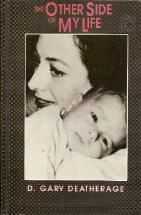 The
Other Side of My Life
(1991, Winston-Derek) D.
Gary Deatherage The
Other Side of My Life
(1991, Winston-Derek) D.
Gary Deatherage
Description:
Deatherage was adopted by Joan in 1941, her second
child after Christina. Named "Christopher Crawford,"
he was taken back by his disturbed natural mother after
only five months with Joan. This is the story of his
search for his roots, which includes his meetings with
Christina and Joan's secretary Betty Barker, as well
as phone conversations with twins Cathy and Cindy.
Sample
Text: Still,
my interest lies in the highly hypothetical and intriguing
question, would life have been different at the Brentwood
home, if I had remained a Crawford? I had asked Christina
the same question and she gave me an emphatic, "No!"
I had asked Betty Barker, and she told me, "I think
you would have loved being Joan's son! Just as Cindy
and Cathy adored her....All you had to do was be a good
human being, and I know you are, so I know you would
have gotten along with her beautifully." She said
Christopher had a bad streak in him, including a vicious
temper. Betty Barker commented, "He didn't bring
Joan much happiness." God only knows what might
have been.
Click
here
for a review by me.
Parade: The Best of Walter Scott's Personality Parade
(1995) Walter Scott
Description: From the back of the book: "For nearly 40
years, millions have turned to Walter Scott's Personality Parade for the
inside story on the people who entertain, govern and shape our world. Now the
highlights of four decades are compiled in The Best of Walter Scott's
Personality Parade." Includes several questions about Joan with some
publicity photos.
Sample Text:
November 26, 1978
Q: Whatever happened to Christopher
Crawford, Joan Crawford's adopted son? Does he agree with his sister Christina
that Joan Crawford was "hateful, cruel, demented and pathological"? - D.B.,
Detroit, Mich.
A: Christopher Crawford, 35, is an electrical and
construction worker who lives on Long Island, New York. "I know it's a terrible
thing to say," he concedes, "but I hated J.C. (which is how he refers to Joan
Crawford). She was evil and mad, and I don't think she ever cared about me. All
she ever cared about was her career. She adopted me and the three other kids
because it was good publicity, good for image." When Christopher was five,
Christina dressed him in her clothes, made him up with lipstick and rouge - a
harmless, childish prank. "When J.C. saw me," he recalls, "she went wild and
whipped me with a three-inch army belt." Christopher and Christina were
disinherited by their mother. Christopher is a divorced Vietnam war
veteran."
 The
Player: A Profile of an Art
(1961, Simon and Schuster) Lillian
Ross and Helen Ross The
Player: A Profile of an Art
(1961, Simon and Schuster) Lillian
Ross and Helen Ross
Description:
55 chapters of actors speaking in their own
words, based on interviews by New Yorker
writer Lillian Ross. Joan appears on pp. 66 - 72.
Click
here
to read Joan's full chapter. The entire book can be
read on the Internet
Archive
website.
(Thanks
to Mike H. for letting me know about both this book
and the archive link.)
The Real Oscar (1981)
Peter H.
Brown
Description: From the
dust jacket: Brown, with an investigative reporter's zeal, has ferreted out
the inside stories from over half a century of Oscar history. In addition to
chronicling the nominees and winners and their contributions to film art, he
tells you why many of them really won...and why others, often more deserving,
did not. Anecdotes about the Academy Award selection and presentation process
are attributed to Joan along with a brief mention of Bette Davis losing the
Oscar to Anne Bancroft in 1963. A small section of the book details Joan's rise
and "fall" and subsequent "rise" when she won an Oscar for Best Actress in 1946
(and the campaigning done on her behalf to win the award).
Sample
Text:
The claim has often been made that MGM naturally made better
and more pictures during this era and deserved its lion's share. But records
show that Warners released 441 pictures during the same decade -- almost as many
as MGM, which launched 464. MGM's iron grip on the Oscar race was blatant enough
for Joan Crawford to show friends internal studio memos which frankly discussed
who should win in each race. "They just passed the best actress around from
studio to studio like a dole," Crawford told her daughter Christina. "It's just
another form of power to them."
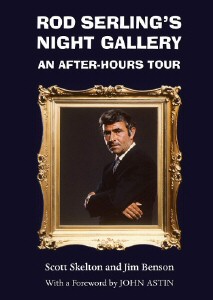 Rod Serling's Night Gallery: An After-Hours Tour (1999,
Syracuse University Press) Scott
Skelton and Jim Benson Rod Serling's Night Gallery: An After-Hours Tour (1999,
Syracuse University Press) Scott
Skelton and Jim Benson
Description:
397 pp. Including 7-page section on the 1969 "Eyes"
episode that Joan appeared in.
Click
here
to read full "Eyes" section on this website.
(Thanks to James.) Or read full book on
Internet
Archive.
Scare Tactic (2000)
John
W. Law
Description: From the
back of the book: "In Scare Tactic, John W. Law artfully resurrects
the intriguing life and outrageously splendid work of legendary horror film
director, William Castle. Clearly written and thoroughly researches, Scare
Tactic is the only book of its kind, delivering a complete biography of
Castle - surveying not only the multiple influences on Castle's career but also
the importance of the man himself." Includes detailed information about the
making and promotion of Straight-Jacket and I Saw What You Did.
Sample
Text:
During the weeks of pre-production Castle wondered if he had
bit off more than he could chew. Would Joan Crawford be more than he could
handle, he wondered? He recalled that her demands were excessive and she was
somewhat of a perfectionist. But because he admired her and usually agreed that
her ideas on the film were right, he bowed to her requests and production moved
right along.
 Scream
Queens: Heroines of the Horrors (1978,
Macmillan)
Calvin
Thomas Beck Scream
Queens: Heroines of the Horrors (1978,
Macmillan)
Calvin
Thomas Beck
  Screen
Personalities
(1933, Grosset & Dunlap) Vincent
Trotta and Cliff Lewis Screen
Personalities
(1933, Grosset & Dunlap) Vincent
Trotta and Cliff Lewis
A Song in the Dark (1995)
Richard
Barrios
Description: From the
back of the book: Chronicling the early musical film years from 1926 to
1934, A Song in the Dark offers a fascinating look at a uniquely American
form of entertainment...Illuminating the entire evolution of the sound medium,
Richard Barrios shows how Hollywood, in seeking to outdo Broadway and
vaudeville, recruited both the famous and the unknown, the newest stars and the
has-beens, the geniuses and the hustlers. The results were unlike anything the
world had seen or heard: backstage yarns, all-star revues, grandiose operettas,
outlandish hybrids -- some wonderful, many innovative, a few ghastly.
The
book contains background information about Hollywood Revue of 1929
and Wir schalten um auf Hollywood and
Joan's role in these films.
Sample Text:
Joan
Crawford, hailed as "the personification of youth and beauty and joy and
happiness," sings and dances "Gotta Feelin' for You," assisted by the Biltmore
Quartet and pianist Dave Snell. The sight is not soon forgotten: a painfully
self-conscious Crawford gamely sings a "hot" song, then flails her way through
an ungainly Charleston, arms flapping and feet stomping in movements redolent
more of pest-control than Terpsichore. There is disturbing and unavoidable
overlay here. All the later qualities connoting this ultimate driven movie star
-- the extremes of dress and makeup, the frightened and frightening
determination to survive every trend, the mass approval achieved at untold
personal price, the rigidity calling itself discipline -- can be glimpsed in
embryonic form lurking within the young girl seen in The Hollywood
Revue.
Stardom:
The Hollywood Phenomenon
(1970) Alexander
Walker
Description:
392 pp., illustrated.
 Star Gazing:
Hollywood Cinema and Female Spectatorship (1994, Routledge)
Jackie Stacey Star Gazing:
Hollywood Cinema and Female Spectatorship (1994, Routledge)
Jackie Stacey
Description: 282 pgs. From the back of the book: "...puts female
spectators back into theories of spectatorship. Combining film theory with a
rich body of ethnographic research, Jackie Stacey investigates the place of
movie stars -- Joan Crawford, Rita Hayworth, Bette Davis, Lauren Bacall, Doris
Day, Deanna Durbin -- in women's memories of wartime and postwar Britain, where
cinema-going was at an all-time high.
Demonstrating the important of cultural
and national location, Stacey focuses on three key processes of spectatorship --
escapism, identification and consumption. Her study challenges the universalism
of the psychoanalytic approach which has dominated the feminist agenda within
film studies for over two decades, and gives a new direction to questions of
popular culture, cinematic pleasure and female desire." With 29 photos,
including 4 of Joan.
Star Profiles (1984)
The Hollywood
Reporter / Marc Wanamaker
Description: From the dust jacket: STAR PROFILES
contains 91 candid biographies of the all-time greats, providing an
extraordinary insight into an industry whose private and public worlds often
alarmingly coincide. The book briefly describes Joan's four marriages (and
romantic relationships) and film career.
Star Shots (1978)
John
Engstead
Description: A
combination of photographs and stories about the legendary stars from past and
present. Engstead reveals the techniques used by the stars to achieve their
particular "looks" -- how they did their hair and makeup, how they dressed, etc.
The book contains a small selection of photographs of Joan taken by Engstead
circa 1945, 1955 and her final portrait in
1976.
Complete text of the section devoted to Joan:
The late
Joan Crawford was a meticulous professional. I first heard about her regimented
life from Allan Vincent, a New York actor under contract to Paramount in the
early 1930s. For his first few weeks in Hollywood, Allan stayed at the Brentwood
home of Joan and her first husband, Douglas Fairbanks, Jr., and he told me their
routine. Joan and Doug would be up every morning at 5:50 to go through a series
of physical exercises. At breakfast they would read the news sections of the
morning paper for at least half an hour. There was a full days' work at the
studio, and when they returned home an instructor would be waiting to give them
a French lesson. After dinner they learned their lines for the next day's
shooting. At 11:30 they would be in bed.
In 1943 I photographed Crawford
for Harper's Bazaar. The sitting was done at her home in Brentwood and
when I arrived she came from the region of the garage, her face flushed and with
very little makeup.
"Excuse my appearance," she said. "I've been ironing.
It's impossible to get help. So I do my own work."
Since then I've done
four or five sittings of Joan. One summer a publicity representative called to
say Miss Crawford wanted to make a sitting of her and asked if we had air
conditioning. Miss Crawford wanted the room kept at sixty-five degrees. The
appointment was made for ten o'clock in the morning -- a very early hour for an
actress if she is not working on a film.
Joan has never done a portrait
sitting with me that has lasted more than an hour or an hour and a half. We both
work fast. One unusual session occurred during the 1960s when she called to ask
if she could stop by my studio late one afternoon and make a quick sitting on
her way to dinner. She came in at five o'clock in an extravagant aquamarine
evening dress and cape and loaded with emeralds -- necklace, earrings, and
bracelets -- big rocks, too. In an hour were through.
In recent years
Joan grew to loathe Hollywood, preferring to live in New York. Notes and
messages from mutual friends would come from her to please call her when I was
in New York: she wanted to make photographs.
In was late summer 1976
before I was able to oblige. I arrived at her apartment at 12:30 for a one
o'clock appointment. Not only was Joan ready but so was the apartment. She had
covered all the carpets where we would work with heavy white canvas, and the
chairs with plastic. Joan answered the door (there was no maid), barefoot. Her
hair had turned gray since I had seen her last, but her strong black eyebrows
were a little at war with the new gray hair. The apartment was in lively colors
of green, yellow and white. The place was immaculate -- not a thing, even, on
the counters of the all-white kitchen. At 2:30 I left, since she had other
appointments.
This year I'll miss Joan's Christmas greeting -- always the
first to arrive, and written by Joan herself.
Stars! (1983)
Daphne
Davis
Description: From the back of the book: "From the most
enduring legends of the twenties to the most glittering phenomena of the
eighties, Stars! sparkles and beguiles as it captures Hollywood's brightest
superstars in hundred of candids, movie stills, publicity photographs - many in
full color - and revealing biographical essays that include filmographies and
Academy Awards."
Sample Text:
The star
died on the anniversary of her marriage to last husband, Alfred Steele, an
executive of Pepsi-Cola, the company she serves as a board member and publicity
spokeswoman during her second career. Although the cause of Crawford's death was
listed as cardiac arrest, friends attribute it to heartbreak.
Step Right Up! I'm Gonna Scare the Pants Off America
(1976) William Castle
Description: The memoirs of a B-Movie Mogul, this book details
Castle's life and career. Background stories behind several of his films are
laid out, including his experiences making Straight-Jacket.
Sample
Text:
Crawford was one of the most dynamic women I'd ever met. A
mind like a steel trap. She knew what she wanted and always got
it.
"Gentlemen, I like the script of Straight-Jacket," Joan announced as
she was serving our luncheon. The quiche lorraine was delicious, and I was ready
for a second helping. She continued, "Straight-Jacket will have to be completely
rewritten as a vehicle for me, or I will not accept the role."
Suddenly,
I lost my appetite. Bob Bloch and I looked at each other. Leo's face was
impassive. No one was eating. Crawford, all business, continued. "Now, here's
what I want done to the script..."
Two hours later, completely baffled,
we agreed we'd do the rewrite. It meant starting practically from scratch, but
getting Joan Crawford was worth it. She had complete approval of cast and
cameraman, and -- thank goodness -- Joan approved me to produce and
direct.
Steven Spielberg: A Biography (1997)
Joseph
McBride
Description: From the
dust jacket: "The most successful director in movie history, Steven
Spielberg...author Joseph McBride reveals hidden dimensions of the filmmaker's
personality and shows how deeply personal even his most commercial work has
been." Includes a photo of Spielberg directing Joan in the Night Gallery
episode "Eyes" and information about
the actual filming of that episode, much of which is pulled from Bob Thomas's
biography of Joan.
The Story of Hollywood (1987)
Barry
Norman
Description: From the
back of the book: This companion book to the 10-part BBC-TNT television
documentary is the word-and-photo chronicle of the "talkies" in Hollywood
-- from their dramatic debut in 1927 to the triumphs and turmoil of today. It is
the story, too, of stars like John Gilbert and Clara Bow, crushed by the
changeover to sound, and of such screen gods and goddesses as Clark Gable, Jean
Harlow, Gary Cooper, Marlene Dietrich, Cary Grant, and, of course, Marilyn
Monroe -- who put their individual stamps on sex appeal. Joan is mentioned
briefly throughout the book and story of how in 1938, Joan's name was on a list
of supposed contributors to Communist causes.
Studio Affairs (1996)
Vincent
Sherman
Description: Includes a
chapter about Joan which details Sherman's experiences with her both
professionally and personally (there is a somewhat graphic description of their
sexual relations). He recounts their activities while filming The Damned Don't Cry, Harriet Craig, Goodbye My Fancy and offers other
anecdotes about their times together. He also recounts discussing a potential
NBC TV movie about Joan's life with Christina shortly after Joan's death but
that Christina asked him to wait until she finished her book, Mommie Dearest.
The book also includes two photos of Sherman with Joan on the set of Harriet
Craig.
Sample Text:
A few
nights later I was awakened by a phone call at 2:00 A.M. It was Joan. Her voice
was barely audible.
"Good-bye, Vincent," she said, and I heard the phone drop. I became
alarmed and pleased with her to pick up the phone and talk to me, but there was
no answer. I told Hedda I was worried and had to find out what was wrong. I got
dressed quickly and raced madly from the Valley to Brentwood, rang the front
doorbell frantically, got no answer, and went to the kitchen, where the cook
finally opened the door for me. I rushed up the back stairs to Joan's bedroom.
She was lying on the bed in her nightgown, the phone still dangling near the
floor, and there was an open bottle of sleeping pills on the night table. I had
no way of knowing how many she had taken or whether she was faking the whole
thing, but I thought it best to get her up and walk her about. She was groggy,
and it took me some time to get her out of bed and on her feet. I had the cook
make some hot coffee. After I had worked with her for an hour, she seemed all
right. I begged her to be sensible and try to understand that I cared about her
but could never leave Hedda or my children. I also reminded her again that I had
told her this when we first met. She calmed down. It was almost 5:00 A.M. when I
got back home.
Survivor (1988)
Christina
Crawford
Description: A follow up
(of sorts) to Mommie Dearest and deals in part with
Joan's adopted daughter Christina's experiences with the public and media
following the release of that book. Christina defends herself against those who
claim the book was merely meant as a type of revenge against Joan -- she insists
it was meant to help "the children" and takes credit for the child
protection laws that followed years afterwards. She also details the events that
led to the eventual production of a Mommie Dearest film for Paramount,
starring Faye Dunaway (Anne Bancroft was Christina's preferred choice). The rest
of the book deals with the stroke Christina suffered in 1981 (she deduces that
Joan's abuse decades before is the reason for her stroke), her divorce from
husband David and then her eventual spiritual awakening.
Sample
Text:
Apparently I was not being criticized for what I said about
my mother because others had said it either before or were in the process of
saying it simultaneously. What I was being criticized for was telling the truth,
in public, about what happened between the two of us, mother and me. That was a
story that had not been told in modern times. A child had never risen up against
the parent to expose the violence, shame, guilt, and struggle for absolute power
between them, over the course of a lifetime.
Many times I would be reminded that what I had written was actually a
mirror in which every reader would see some part of themselves. Precisely
because I had written through the eyes of a child and because every reader had
once been a child, it was impossible for people not to relate emotionally. The
"book-mirror" I had created was the reader's own childhood and the emotional
reaction was a reflection of unfinished issues the reader had with her or her
own parents.
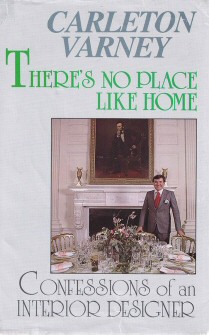 There's
No Place Like Home: Confessions of an Interior Designer (1980,
Bobbs-Merrill) Carleton
Varney There's
No Place Like Home: Confessions of an Interior Designer (1980,
Bobbs-Merrill) Carleton
Varney
Description:
Decorator Varney offers personal stories of designing
for famous clients in the 1970s, including Joe Namath,
Ethel Merman, rich Iranians, and Carter's White House.
The most interesting chapters by far, though, are the
ones on Edith Beale of Gray Gardens fame (he interviewed
her in 1978), and on his relationship with Joan Crawford
(the 15-page "Joan Crawford Was Not Just 'Mommie
Dearest'"). In the latter, Varney recounts his
12-year friendship with Joan and his designing of her
Imperial House apartment; most importantly, he includes
his interviews with Darinka Papich, Joan's latter-day
companion, about Joan's last days before her death.
Sample
Text:
I
was on a train going from Gstaad to Montreux, Switzerland,
when I heard of Joan's death... The memories flashed
through my brain with the speed of the passing scenery:
the shockingly tiny woman at the Pepsi fountain; the
heartbroken woman leaving her past behind on Fifth Avenue;
the tyrant; the persnickety neatnik, Kleenex box and
felt pads in hand... Most of all, that curious, almost
oedipal fascination of sex and motherliness: power and
beauty, vitality and fragility, pride and vulnerability.
To
read quotes from this book re Joan's last days, see
the 1977
Timeline
page.
Things I Did and Things I Think I Did (1984)
Jean
Negulesco
Description: From
the dust jacket: Here is the delightful memoir in words and pictures of
artist, writer, director, and now raconteur par excellenceI Jean
Negulesco. The author has been -- through luck, enterprise, and an overwhelming
romanticism -- a part of our century's most vibrant cultural history, and now
presents an uncensored peek into the private lives of the personalities he has
known. Negulesco recounts his experiences with Joan during the filming of Humoresque and The Best of Everything.
Sample
Text:
One evening at Jerry's home in Beverly Hills, Joan had a
real diamond pasted on her forehead above the left eye. The whispers had it that
Joan was launching a new fad in wearing jewelry.
I
had to find out. I pointed at her pasted diamod: "Why, Joan?"
"Johnny, don't you see? Nobody has noticed the bags under my
eyes."
This Fabulous Century: 1930 - 1940 (1969)
Time-Life Books,
Inc.
Description: Part of a larger series
devoted to exploring life in America. This volume looks at 1930 to 1940 and
includes a photo of Joan dancing with Alfred G. Vanderbilt at the 1937 Screen
Actor's Guild Ball in Los Angeles.
This 'n That (1987)
Bette Davis with
Michael Herskowitz
Description: Autobiography by Bette Davis. She devotes a
chapter to What Ever Happened to
Baby Jane? and her experiences with Joan during the making of that film.
Sample Text (Bette's comments about Joan):
"Feud is a Hollywood word, a wildly overused Hollywood word. Did
Bette Davis and Joan Crawford ever feud during the filming of Baby Jane?
No!"
"Joan was a pro. She was always punctual, always knew her lines. I will
always thank her for giving me the opportunity to play the part of "Baby Jane"
Hudson."
"In her vanity she was consistent. As part of her wardrobe, Miss Crawford
owned three sizes of bosoms. In the famous scene in which she lay on the beach,
Joan wore the largest ones. Let's face it, when a woman lies on her back, I
don't care how well endowed she is, her bosoms do not stand straight up. And
Blanche had supposedly wasted away for twenty years. The scene called for me to
fall on top of her. I had the breath almost knocked out of me. It was like
falling on two footballs!"
"It was in Joan's contract that the stage had to be kept at a certain
temperature. Members of the crew wore lumberman's jackets. In southern
California. In August. On a soundstage."
The 20th Century (1999)
JG Press
Description: An illustrated history of our lives and
times. Includes a few mentions of Joan and a page devoted to Mommie Dearest.
Twinkle, Twinkle, Little Star (1995)
Dick
Moore
Description: Former child
star Dickie Moore relates the true story of what it was like to be a child star
in Hollywood based on his own experiences and via contributions from Jackie
Coogan, Natalie Wood, Shirley Temple, Mickey Rooney and other famous child
stars. Coogan tells the story of how during the filming of Old Clothes, in order to get
Joan to cry during a big scene in the film, his father and producer of the film,
Jack Coogan, had detectives follow her for two weeks and learn everything about
her. The scene in question called for her to enter alone and come down the
stairs and start to cry. Coogan ordered everyone off the set and then told Joan
everything he'd found out about her. Horrified, she began to cry.
Moore
relates how when he played a small role in The Bride Wore Red and that he spent
a lot of time with Joan's husband, Franchot Tone, who taught him the rudiments
of chess. Moore indicates that the couple spoke very little to one another and
that Franchot would receive phone calls from other women and have to take the
calls in Joan's dressing room which was equipped with a phone; his was not.
Next, Moore recounts this story:
Sample Text:
One day,
Miss Crawford and I were working alone in a scene when suddenly an electrician
-- a gaffer -- fell from the catwalk above the set and landed not more than two
feet from her. A light fell on top of him, also narrowly missing her. I was
whisked away. Production, of course, was halted. The studio ambulance arrived
and he was taken immediately to the studio hospital. Eventually, the scene
resumed. I was impressed by Miss Crawford's concern for the man, for his family,
for the medical attention he received. She wanted absolute assurances that he
was cared for properly, that he remained on salary, and that his family was
provided for. She would not resume shooting until those assurances were given,
and she called the hospital each day for reports on his condition.
Click
here
to read more excerpts from the book. (Thanks to
Mike H. for this contribution!)
Vanity Fair's Hollywood (2000)
Edited by Graydon
Carter and David Friend with text by Christopher Hitchens
Description:
From the Dust Jacket:
"The definitive book of its kind, Vanity Fair's Hollywood is an
incomparable collection of classic photographs, essays, and caricatures
depicting a century of Hollywood power, glamour, myth and mystery - directly
from the pages of Vanity Fair; from 1914 to today." Includes a photo
of Joan and Douglas Fairbanks Jr. on the beach circa 1929. Also, there is a
chapter devoted to a reprint of an article that appeared in the February 1936
issue of Vanity Fair (and an accompanying color photo of Joan).
The Variety History of Show Business (1993)
The Editors of
Variety
Description: From the
Dust Jacket: "Each of forty chapters focuses on a pivotal event, introduces
its key players, and explores its long-term impact on show
business." Includes a chapter devoted to Grand Hotel and the long-term
effect it had in Hollywood (making films with an all-star cast). Includes some
photos of Joan taken on the set.
 When Hollywood Was Fun! (1993)
Gene Lester with
Peter Laufer When Hollywood Was Fun! (1993)
Gene Lester with
Peter Laufer
Description: A
behind-the-scenes account of Hollywood photographer Gene Lester's experiences
with the stars. Lester, who worked for the Saturday Evening Post, Silver
Screen and other important magazines of the era (thirties through the early
sixties), recounts his sessions with such stars as Lana Turner, Spencer Tracy,
Clark Gable, Norma Shearer, etc. Chapter Eight is called "Swimming with Joan
Crawford and Her Freckles" and details Lester's day with Joan to do a home
layout for Silver Screen.
Sample Text:
I shot
with a 35mm camera and I never made prints bigger than five-by-seven. In a
five-by-seven print, nothing would be as blatant as it would be in an
eight-by-ten or an eleven-by-fourteen. I printed the entire roll of her, with
her freckles, on soft paper. I showed the whole batch to Joan and to Howard
Strickling and Joan said, "These are the first pictures I've ever seen where my
freckles show and I don't mind. People know I've got freckles. But I don't like
them when they're black splotches all over me. I don't mind if they're visible,
but not if they're coming at you like the gorilla that ate
Brooklyn."
Who's Had Who (1987)
Simon
Bell, Richard Curtis and Helen Fielding
Description: A somewhat humorous look at the love lives of
famous personalities, including celebrities, world-leaders, etc. There are a few
pages devoted to Joan and her romantic liaisons. They are not, however, very
well researched (mention of her final husband Albert Steele is made) and
the authors seem the favor the Mommie Dearest
storyline, claiming it's much more fun than the potential truth.
Sample
Text:
Truth is, Joan doesn't sound a real cutey. Her career was
the only thing that mattered to her, and she was obsessed by it. She loved her
fans and is said to have written over 70,000 letters a year to them. Whenever
she divorced, she saw it not as a private sorrow, but as an occasion to get a
press scoop to benefit her career. When she wasn't divorcing or marrying she was
"very predatory with men", and liked to offer them small roles in return for
sex. "She passed from one to another with...ease."
Wisecracker (1998)
William J.
Mann
Description: From the
Dust Jacket: Here is William Haines virtually unknown story -- rich in
detail, revelations and scandal. As the political climate in Hollywood changed,
Billy refused to go along. He bucked studio pressure to stop carousing and get
married, leading to skirmishes with Louis B. Mayer and the police; there was
even a violent encounter with gay-bashing white supremacists in 1936. Here, for
the first time, the stories of Hollywood's gay stars are seen in context with
their time and with one another, revealing a pattern of intimidation by
the studios and, ultimately, the establishment of the Hollywood closet...Billy
gained Hollywood's abiding respect, and his union with Jimmie Shields lasted
nearly fifty years. Joan Crawford, their best friend, called them "the
happiest married couple in Hollywood."
Sample
Text:
...the three old friends managed to have at least one night
out on the town together. They'd taken adjacent rooms at the Dorchester and
made reservations at a posh London eatery, Les Ambassadeurs. Although the
restaurant was not far from the hotel, none of them knew quite where it was, so
they hired a chauffeur. Billy told friends how Joan affected a British accent
and told the chauffeur the name of the restaurant. They got horribly lost and
missed their reservations, but the three of them, laughing in the backseat of
that Rolls-Royce, were as gay and giddy as they had been nearly fifty years
before.They had no way of knowing it would be the last time.
A
Woman's View (1993) Jeanine
Basinger
Description: From the
Dust Jacket: Basinger examines dozens of films, exploring the seemingly
intractable contradictions at the convoluted heart of the woman's genre -- among
them, the dilemma of the strong and glamorous woman who cedes her power when she
feels it threatening her personal happiness, and the self-abnegating woman whose
selflessness is not always as "noble" as it appears. Basinger looks at the stars
who played these women (Kay Francis, Barbara Stanwyck, Joan Crawford, Bette
Davis, Rosalind Russell, Susan Hayward, Myrna Loy, and a host of others) and
helps us understand the qualities -- the right off-screen personae, the right
on-screen attitudes, the right faces, the right figures for carrying the right
clothes -- that made them personify the woman's film and equipped them to make
believable drama or comedy out of the crackpot plots, the conflicting ideas, and
the exaggerations of real behavior that characterize these movies.
Sample
Text:
Many people think that in the 1930s Crawford played the shop
girl who rises to wealth, and that is her image for that decade. Yet in the
twenty-six movies starring Joan Crawford released between 1930 and 1940, she
played a shop girl exactly twice, in Our Blushing Brides and The
Women...This means that Crawford played an heiress or socialite eight times,
or four times as often as she played a shop girl. She was an entertainer of some
kind six times, a prostitute once, and a thief twice. She was a working girl
three times -- once a housemaid, once a reporter, and once a stenographer. Twice
she was a factory worker (which is not a shop girl), and in both cases she
quickly rose from the factory to become either a successful model or the
mistress of a wealthy man. (Once she was an ambiguous character who worked for a
steamship line, but who seemed to be independently wealthy.) During the entire
decade, Joan Crawford played only one totally unsympathetic role, that of
Crystal in The Women.
| |